Walk into practically any new restaurant opening in Dubai this year and eventually you’ll spot it: a flake of gold, resting on top of something you’d normally just eat with your hands. Cappuccinos get it. Steaks get it. Even, improbably, hummus gets it. The gold leaf food trend has moved from five-star hotel lobbies into everyday menus across the city, and it isn’t purely for show — though it is, undeniably, a little bit for show.
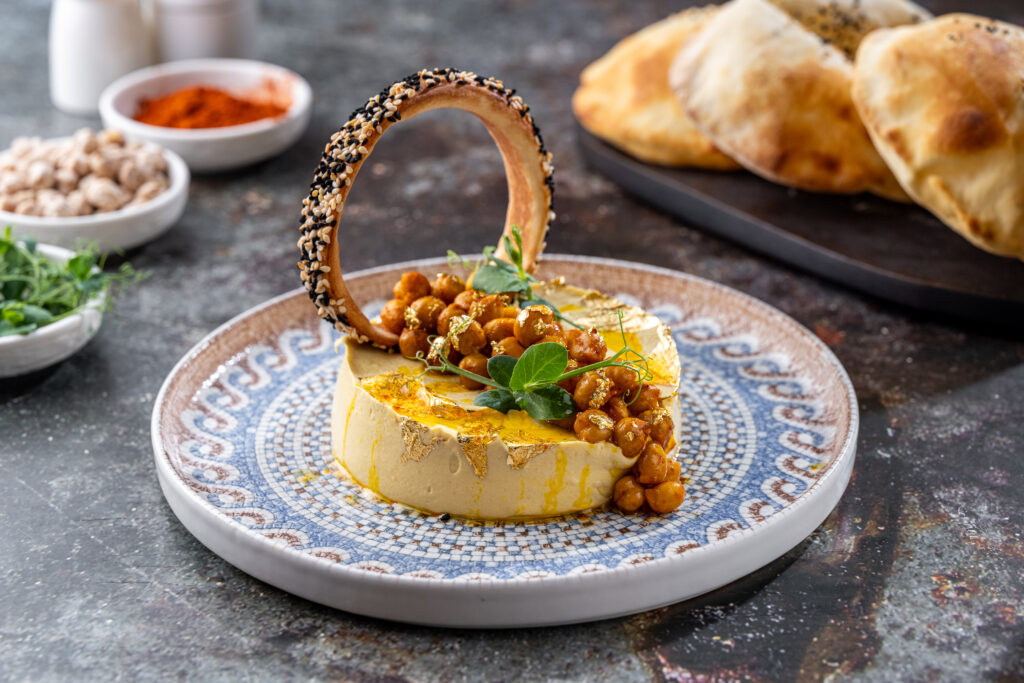
At Daoud Cafe in Business Bay, that trend lands on a dish built on a recipe thousands of years old: hummus, dressed in turmeric, roasted butternut, and a single sheet of 24-karat gold leaf. It photographs itself. But understanding why Dubai fell for edible gold — and which versions are actually worth ordering — takes a bit more than a good photo.
What Is Dubai’s Gold Leaf Food Trend, Exactly?
Dubai’s gold leaf food trend is the practice of finishing dishes and drinks, from desserts to hummus to coffee, with thin, edible sheets of 22 to 24-karat gold. It began in the emirate’s luxury hotel scene roughly a decade ago and has since spread into casual dining, where chefs use it to turn a familiar dish into a visibly premium one.
The gold itself carries almost no flavor. What it carries is signal: this dish was made to be noticed, photographed, and remembered. In a city built on spectacle, that signal travels fast on Instagram and TikTok, which is a large part of why the gold leaf food trend never really went away.
Where It Started
Early examples clustered around desserts — gold-dusted cakes, gold-leaf chocolate — before spreading to savory plates. Gold-wrapped burgers made international headlines; gold-topped shawarma followed not long after. The common thread stayed the same: take something people already recognize, then elevate it visibly.
Why Edible Gold Became a Dubai Signature
Dubai’s food scene has always leaned into maximalism — the tallest building, the biggest mall, the most elaborate afternoon tea. Edible gold fits that instinct perfectly. It’s inert, food-safe, and visually unmistakable, which makes it an easy way for a kitchen to say “this is the version worth paying for” without changing the dish’s actual flavor.
- It photographs better than almost any other garnish.
- It needs no refrigeration or special handling once applied.
- It works on nearly any dish, sweet or savory.
- It has become shorthand for a city known for luxury dining.
Is 24-Karat Gold Leaf Actually Safe to Eat?
Yes. Pure 24-karat gold leaf is chemically inert, meaning the body can’t digest or absorb it, and it passes through the system unchanged. It’s approved as a food additive in the EU and widely used across the Gulf’s fine-dining scene, provided it is genuinely gold and not a cheaper imitation foil.
That last caveat matters. Because gold leaf has almost no taste and little weight, it’s one of the easiest garnishes to fake, which is exactly why it’s worth knowing what a kitchen that takes the ingredient seriously actually does with it.
Rose Gold Hummus: Where the Trend Meets Levantine Tradition
On Daoud Cafe’s menu, the gold leaf food trend lands on one of the Levant’s oldest comfort foods. The Rose Gold Hummus starts with a classic chickpea and tahini base, folded with golden turmeric and roasted butternut squash until it turns a warm amber color, then finished with a single sheet of 24-karat gold leaf laid across the top.
It’s served in a cafe shaped by its own kind of spectacle: a Suspended Garden dining room inspired by the Hanging Gardens of Babylon, with views toward the Burj Khalifa from the restaurant’s Business Bay address. Reading about the concept on the Daoud Cafe story page makes the pairing feel less like a gimmick and more like a continuation of an idea the whole space is already built around: ancient flavor, dressed for a modern skyline.
The dish sits alongside other hummus variations on the menu, including a black truffle version and one topped with spiced minced lamb, so guests who want to compare the gold leaf version against something more traditional can do it in the same sitting.
How to Tell a Real Gold-Leaf Dish From a Gimmick
Not every gold flake is created equal, and a few quick checks separate the real thing from a cheap stunt.
- Ask what karat it is. Genuine edible gold is labeled 22 to 24-karat; anything vaguer is a warning sign.
- Check the base dish. Gold leaf should sit on something made with care, not mask a forgettable plate.
- Look for texture, not just shine. A dish built around gold should still taste layered once the leaf is gone.
- Consider the kitchen’s track record. A restaurant with a defined culinary identity is more likely to use gold with intention.
Judged by that standard, Rose Gold Hummus holds up: the turmeric and butternut do real work on the flavor before the gold leaf ever touches the plate.
Frequently Asked Questions
Does gold leaf change the taste of food?
No. Pure gold leaf is tasteless and odorless, so it adds no flavor of its own. Its role is purely visual and textural — a thin, almost weightless sheet laid over a dish that has already been seasoned and finished.
What cuisine does Daoud Cafe serve?
Daoud Cafe serves Levantine-inspired cuisine with a modern, luxurious presentation, in a Business Bay location with views toward the Burj Khalifa. The menu spans mezze, grills, seafood, pasta, and sushi alongside signature dishes like Rose Gold Hummus.
Where is Daoud Cafe located?
Daoud Cafe is located at Millennium Binghatti Residence, Shop 3 & 5, Marasi Drive, Business Bay, Dubai, and is open daily from 8:00 am to 2:00 am.
How do I book a table at Daoud Cafe?
Reservations can be made directly through the Daoud Cafe reservation page. Walk-ins are welcome, though booking ahead is recommended for evenings and weekends.
Whether it’s the gold leaf or the Babylon-inspired dining room that gets you through the door, Rose Gold Hummus is worth ordering on its own merits. Reserve a table at Daoud Cafe and see where the trend actually earns its shine.